Breathing Room: The Business Case for Investing in Air Quality and Mental Wellness Spaces
For decades, corporate real estate decisions were governed almost exclusively by square footage, location, and lease rates. Wellness was an afterthought—a ping-pong table in the break room or a motivational poster in the corridor. That calculus is changing rapidly, and the shift is being driven not by sentiment but by data.
Across the United States, a growing number of enterprises are treating office air quality, biophilic design, and dedicated mental wellness spaces as strategic assets rather than discretionary amenities. The early adopters are reporting outcomes that translate directly to the bottom line: fewer sick days, stronger engagement scores, and measurable improvements in talent retention. For workspace planners and senior operations leaders, the question is no longer whether these investments are worth making—it is how quickly they can be implemented before the competitive gap widens.
The Hidden Cost of Poor Indoor Air Quality
The US Environmental Protection Agency has long noted that indoor air can be two to five times more polluted than outdoor air, yet most office buildings were designed with minimal attention to ventilation quality. The consequences are not abstract. Studies published in the Harvard T.H. Chan School of Public Health have linked poor indoor air quality to a 50 percent reduction in cognitive function scores across tasks involving crisis response, information usage, and strategy.
For a mid-sized enterprise with 200 knowledge workers, that cognitive drag represents an enormous drag on output—one that rarely appears on a facilities budget but consistently shows up in project timelines and decision quality. When companies invest in high-efficiency particulate air (HEPA) filtration systems, CO₂ monitoring, and enhanced HVAC protocols, the productivity recovery can be substantial. One commercial real estate firm operating across multiple Midwest markets reported a 14 percent reduction in unplanned sick leave within 12 months of upgrading air filtration in its headquarters—a figure that, when converted to labor hours, exceeded the capital cost of the upgrade within the first year.
The business case, in short, is not built on wellness philosophy. It is built on operational math.
Biophilic Design: More Than an Aesthetic Choice
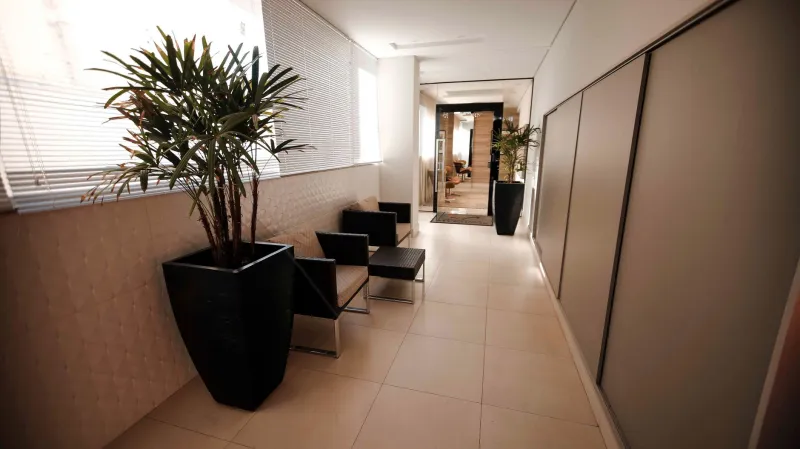
The term "biophilic design" has circulated in architecture circles for years, but its adoption in mainstream corporate environments has accelerated sharply since 2021. The concept—integrating natural elements such as living plant walls, natural light optimization, water features, and organic materials into the built environment—was once associated primarily with tech campuses in California. Today, it is appearing in law firms in Chicago, financial services offices in New York, and manufacturing headquarters in Texas.
The reason is evidence. Research from the Human Spaces Global Report, which surveyed more than 7,600 office workers across 16 countries including the United States, found that employees working in offices with natural elements reported a 15 percent higher level of wellbeing and a 6 percent higher productivity score than those in environments without such features. More critically, 33 percent of respondents cited the absence of natural light as a primary dissatisfier in their current workspace.
For talent acquisition and retention, these numbers carry real weight. In a labor market where skilled professionals continue to exercise significant leverage over workplace preferences, the physical quality of an office environment functions as a differentiator. A workspace that supports biological wellbeing signals organizational investment in the people who occupy it—and that signal resonates during both the hiring process and annual retention reviews.
Quiet Zones and Mental Wellness Spaces: Addressing the Attention Economy
Open-plan offices promised collaboration but frequently delivered chronic distraction. The pendulum is now swinging toward a more nuanced model—one that acknowledges that focused, uninterrupted work requires designated physical conditions that typical open floors cannot provide.
Dedicated quiet zones, focus rooms, and mental wellness spaces are becoming standard features in high-performing corporate environments. These are not simply empty rooms relabeled with calming paint colors. They are purpose-designed spaces with acoustic treatment, controlled lighting, minimal visual clutter, and—in more progressive implementations—access to guided mindfulness resources or simply a reliable guarantee of silence.
The business rationale is grounded in what cognitive scientists call "attention restoration theory," which holds that environments offering respite from stimulation allow the prefrontal cortex to recover its executive function capacity. Translated into workplace terms: employees who have access to genuine mental decompression spaces return to collaborative or demanding tasks with measurably better concentration and decision-making capability.
Several US-based professional services firms have begun tracking engagement survey metrics specifically tied to wellness space availability. In one documented case from a 400-person consulting firm in the Mid-Atlantic region, the introduction of four dedicated focus and wellness rooms—representing less than 3 percent of total floor space—corresponded with a 9-point increase in the "I have what I need to do my best work" item on the firm's quarterly pulse survey. Turnover in the 18 months following the renovation ran 11 percent below the prior period average.
Quantifying the Wellness ROI
Skeptical CFOs often ask for a number. The challenge has historically been attribution—how do you isolate the financial impact of a wellness intervention from the dozens of other variables affecting productivity and retention? The methodology is becoming more sophisticated.
A practical framework for US enterprises to consider involves three primary measurement tracks:
Absenteeism reduction: Calculate the average daily cost of an absent employee (salary, benefits, and productivity loss) and track changes in unplanned absence rates before and after wellness-focused interventions. Even a 5 percent reduction across a workforce of 300 employees can represent six-figure annual savings.
Retention improvement: The cost of replacing a mid-level professional in the United States typically ranges from 50 to 200 percent of annual salary when recruiting, onboarding, and ramp-up time are factored in. If wellness investments contribute to a 10 percent reduction in voluntary turnover, the financial return is significant and modelable.
Productivity recovery: Using tools such as output tracking, project completion rates, or cognitive performance benchmarks, organizations can establish baseline data and measure improvement following environmental upgrades. This is the most complex track to manage but often yields the most compelling internal business case.
The Strategic Imperative
Workspace strategy has always been about enabling work. What is shifting is the understanding of what "enabling" truly requires. A well-lit, well-ventilated office with spaces designed to support both focused and collaborative work is not a luxury offering—it is a functional requirement for organizations that expect sustained high performance from their people.
The enterprises investing in air quality systems, biophilic environments, and mental wellness spaces today are not making a bet on a trend. They are responding to what the evidence consistently demonstrates: that the physical environment is a direct input into human performance, and that optimizing it is among the highest-return investments available to a modern business.
For operations and facilities leaders navigating capital allocation decisions, the message is straightforward. The wellness ROI is real, it is measurable, and the window for early-mover advantage in talent markets is narrowing. The cost of inaction is no longer theoretical—it shows up in engagement data, retention reports, and quarterly productivity figures, quarter after quarter.