From Fixed Desks to Fluid Zones: How Modern Enterprises Are Redefining the Workplace
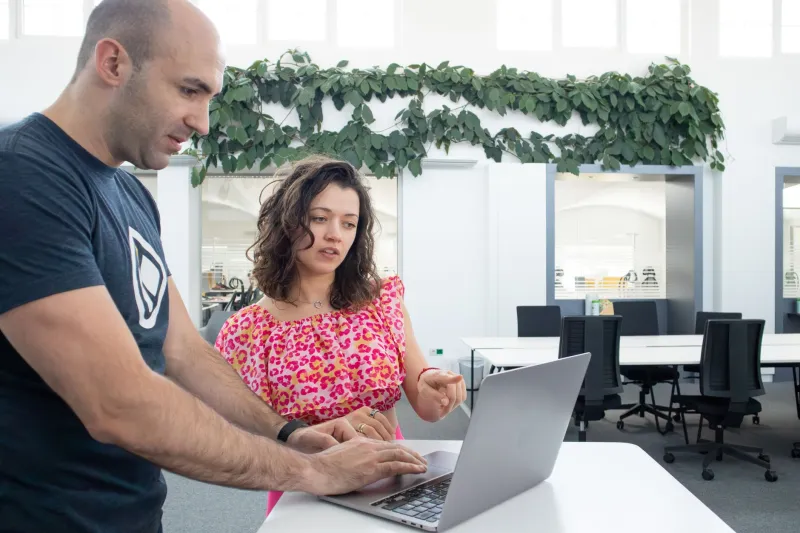
For decades, the American office followed a predictable blueprint: assigned desks, fluorescent lighting, and rows of cubicles stretching from one end of a floor plate to the other. That model served its purpose. But the workforce has changed fundamentally, and the spaces designed to support it must follow.
Hybrid work—once considered a temporary accommodation—has become a structural reality for a significant portion of U.S. enterprises. According to data from McKinsey & Company, more than 58 percent of American workers now have the option to work remotely at least part of the time. The question facing business leaders is no longer whether to accommodate hybrid teams, but how to design physical environments that genuinely serve them.
The Decline of the Dedicated Desk
Among the most visible shifts in contemporary workspace design is the phasing out of permanently assigned workstations. When employees are present in the office only two or three days per week, dedicating a fixed desk to each individual represents a significant misallocation of real estate. Occupancy sensors deployed across corporate campuses consistently reveal that traditional offices operate at utilization rates well below 60 percent on any given day.
In response, organizations are transitioning toward activity-based working models—arrangements in which employees select from a variety of workspace types depending on the task at hand. A team member preparing a presentation might work from a quiet focus pod. A cross-functional group brainstorming a product launch might gather in a collaborative lounge. An executive conducting back-to-back video calls might reserve a soundproofed phone room for the afternoon.
This is the essence of what workplace strategists increasingly refer to as an "AKA" space: a single location that operates under multiple identities, serving different functions for different people at different times. The office is no longer just an office. It is simultaneously a collaboration hub, a client experience center, a training facility, and a quiet retreat—depending on the moment.
What Fortune 500 Companies Are Actually Doing
The shift is not theoretical. Some of the largest employers in the United States have made substantial, public commitments to reconsidering their physical footprints.
Microsoft, which employs tens of thousands of workers across its Redmond, Washington campus and satellite locations nationwide, has invested heavily in redesigning its spaces to support what it calls "hybrid-first" collaboration. Conference rooms have been retrofitted with camera systems that give remote participants an equitable view of in-person attendees. Informal collaboration zones have replaced rows of individual workstations in several buildings.
Similarly, Salesforce—headquartered in San Francisco—has embraced a tiered approach to office attendance, organizing its workforce into "flex," "office-based," and "fully remote" categories. Rather than mandating uniform attendance, the company has focused on ensuring that when employees do come in, the environment is meaningfully better than working from home.
Downsizing is also a measurable trend. CBRE Group, one of the nation's largest commercial real estate services firms, has reported consistent increases in the number of U.S. companies either reducing their total square footage or restructuring lease agreements to allow for greater flexibility. The goal is not to eliminate the office but to right-size it.
Designing for the Hybrid Reality
Transitioning to a hybrid-first workspace requires more than rearranging furniture. It demands a deliberate, data-informed approach to how space is allocated, managed, and measured.
Start with utilization data. Before making any design decisions, organizations benefit from understanding how their current space is actually being used. Occupancy sensors, badge access records, and desk booking analytics can reveal patterns that are invisible to the naked eye—which floors are consistently underused, which meeting rooms are chronically overbooked, and which amenities employees genuinely value.
Design for the work, not the worker count. Rather than calculating square footage based on headcount, leading organizations are mapping space to the types of work being performed. Deep-focus tasks require acoustically isolated environments. Collaborative work benefits from flexible furniture and writable surfaces. Social connection—increasingly recognized as a legitimate business function—calls for comfortable, informal gathering areas.
Invest in the technology layer. Hybrid work fails when the in-office experience is not meaningfully integrated with remote participation. Equipping meeting rooms with professional-grade audio-visual systems, deploying intuitive desk and room booking platforms, and ensuring reliable, high-bandwidth connectivity are foundational requirements—not optional enhancements.
Establish clear behavioral norms. Physical redesign alone cannot sustain a hybrid culture. Organizations that succeed in this transition tend to establish explicit expectations around when employees come in, how spaces are reserved and released, and how teams coordinate their schedules to maximize in-person overlap.
The Productivity and Retention Case
Skeptics of hybrid work often cite concerns about productivity and cohesion. The data, however, tells a more nuanced story. Research published by Stanford economist Nicholas Bloom suggests that well-structured hybrid arrangements can increase employee productivity by approximately 13 percent compared to fully in-office settings, while also reducing attrition—a particularly significant finding given the cost of replacing skilled workers.
Employee satisfaction data reinforces the case for flexibility. Surveys consistently indicate that schedule autonomy ranks among the top factors American workers consider when evaluating job opportunities. Organizations that fail to offer meaningful flexibility risk losing talent to competitors who do.
Critically, the office itself still plays an important role—but a more targeted one. It serves as the venue for activities that genuinely benefit from physical proximity: complex problem-solving sessions, onboarding and mentorship, relationship-building, and high-stakes client interactions. When the office is reserved for these high-value purposes, employees are more likely to make the commute willingly and to engage more fully when they arrive.
Building a Workspace That Works Harder
The future of the American workplace is not a binary choice between a full office and a fully remote model. It is a thoughtfully engineered environment that adapts to the needs of the people it serves—one that operates, in a very real sense, under multiple names at once.
At AKA Office, we work with organizations across the country to design, implement, and manage workspaces that reflect this new reality. Whether you are evaluating your current floor plan, modernizing your booking and management systems, or rethinking your real estate strategy from the ground up, the right workspace infrastructure can become one of your organization's most powerful competitive assets.
The office is not disappearing. It is evolving. The enterprises that recognize this—and invest accordingly—will be better positioned to attract talent, sustain culture, and drive performance in the years ahead.