Booked Solid, Sitting Empty: How to Fix the Meeting Room Utilization Problem in Your Office
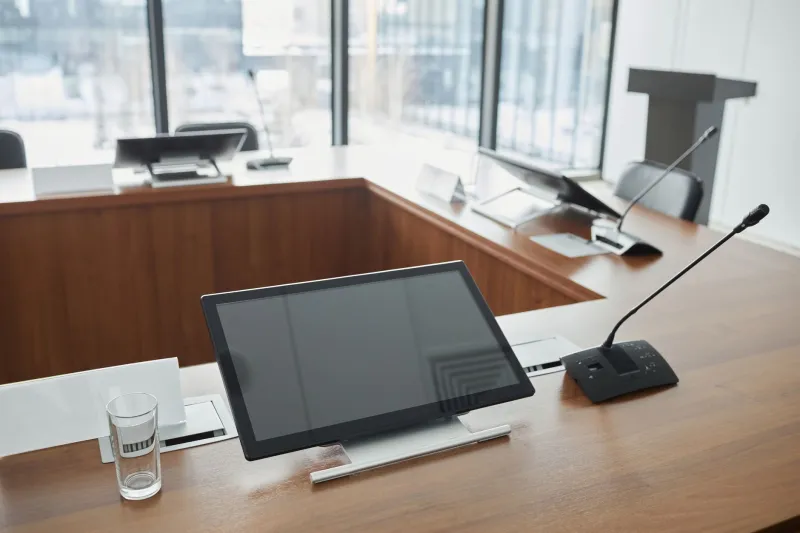
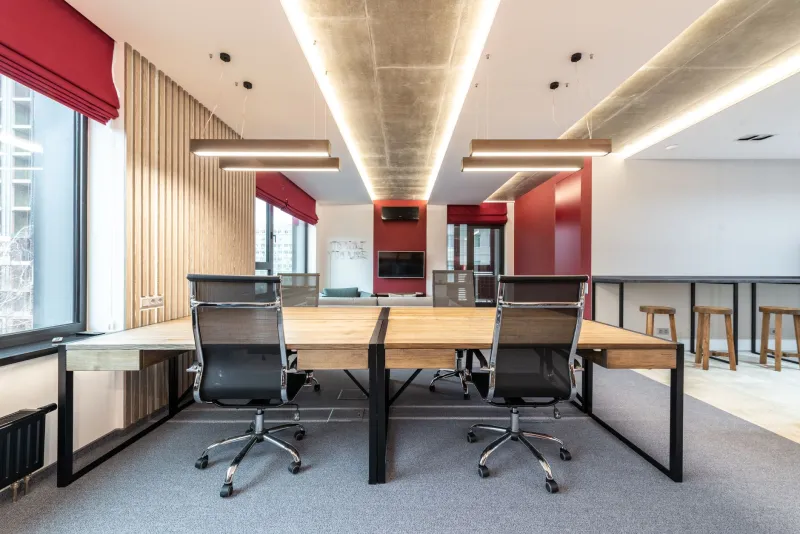
Walk through the average corporate office on a Tuesday morning and you will likely observe the same contradiction: a row of calendar-blocked conference rooms sitting dark and unoccupied while two colleagues negotiate a project decision in the corridor outside, and a third employee takes a video call from a storage closet repurposed out of necessity. The meeting room utilization problem is one of the most pervasive—and most expensive—inefficiencies in corporate real estate, and it is hiding in plain sight on booking systems across the country.
For US enterprises paying anywhere from $50 to $150 per square foot annually in major metropolitan markets, a conference room that is booked 80 percent of the time but actually occupied only 30 percent of the time is not a scheduling inconvenience. It is a significant, ongoing capital misallocation. Addressing it requires more than a reminder email asking employees to cancel unused reservations. It requires a systematic understanding of how teams actually use space—and a willingness to redesign both the infrastructure and the processes around that reality.
Why Rooms Get Booked but Not Used
The phenomenon has a name in facilities management circles: "ghost bookings." These are reservations made in good faith that are subsequently abandoned when a meeting is cancelled, shortened, or moved to a different format—but the room is never released. In organizations without automated release systems or real-time occupancy monitoring, a single ghost booking can lock a room out of circulation for an entire half-day.
But ghost bookings are only part of the story. Several structural patterns contribute to the utilization gap:
Speculative reservations: In offices where popular rooms are scarce, employees book them defensively—reserving a 12-person conference room for a two-person check-in simply because smaller options are unavailable or unreliable. The room is technically "used," but it is dramatically oversized for the actual need, preventing appropriately sized meetings from booking it.
Format mismatch: As hybrid and asynchronous work practices have become standard, the nature of meetings has changed. A significant proportion of what used to require a formal conference room now happens effectively in a smaller, informal setting—a huddle booth, a standing collaboration area, or even a private phone room. When the only available reservation options are traditional conference rooms, employees either over-provision space or give up on finding a room at all.
Friction in the booking process: Counterintuitively, booking systems that are difficult to navigate contribute to both over-booking and under-utilization. Employees reserve rooms early and far in advance to avoid the frustration of a last-minute search, then fail to update those reservations as plans change.
Lack of accountability: In most organizations, there is no meaningful consequence for holding an unused room. Without occupancy sensors or check-in requirements, the booking system operates on the honor system—and the honor system does not scale.
What the Data Reveals About Actual Usage
Organizations that have deployed occupancy sensors and space analytics tools are frequently surprised by what the data shows. Industry benchmarks from workplace technology providers consistently indicate that actual meeting room utilization in US corporate offices runs between 30 and 40 percent of booked time. In some environments, particularly those with older, large-format conference rooms designed for a pre-hybrid era, measured utilization falls below 25 percent.
Equally revealing is the pattern of where informal collaboration actually occurs. Sensor data from multiple enterprise deployments shows that a significant volume of two-to-four-person interactions—the most common meeting size in most organizations—happens in open areas, at desks, near coffee stations, and in circulation zones. These are not planned meetings; they are the organic, high-value exchanges that drive decision-making and team cohesion. They do not appear in booking systems at all, which means they are entirely invisible to facilities planners relying on reservation data to understand space demand.
The implication is significant: the formal meeting room inventory is both over-provisioned in size and under-provisioned in terms of the types of spaces employees actually want to use.
Right-Sizing the Meeting Room Portfolio
Addressing utilization waste begins with an honest audit of the existing meeting room portfolio. For most US enterprises, this means answering four questions:
- What is the actual occupancy rate of each room, measured by sensor data rather than booking records?
- What is the average number of attendees per meeting, and how does that compare to room capacity?
- What proportion of booked meetings are for two to four people, and how many rooms of that size currently exist?
- Where are employees conducting informal collaboration that is not captured in the booking system?
The answers typically point toward the same structural recommendation: reduce the proportion of large-format conference rooms and increase the availability of smaller, more flexible collaboration spaces. This does not necessarily require a major capital renovation. In many cases, a large 20-person boardroom can be partitioned into two or three purpose-designed spaces for smaller team interactions, with movable acoustic panels and flexible furniture systems enabling reconfiguration as needs evolve.
Right-sizing also involves honest conversations with department leaders about space entitlement. In many organizations, certain teams have historically "owned" specific conference rooms as de facto private meeting spaces. Breaking those informal arrangements—diplomatically but firmly—is often one of the fastest ways to improve availability for the broader employee population.
Implementing Smart Reservation Systems That Reflect Reality
Technology alone cannot solve the utilization problem, but it is an essential component of any durable fix. Modern room booking systems offer several capabilities that directly address the structural drivers of ghost bookings and format mismatch:
Automated room release: Systems that require a physical check-in at the room panel within a defined window after the meeting start time—typically five to ten minutes—and automatically release the space if no check-in is registered. This single feature can recover 15 to 25 percent of previously wasted booking capacity in most office environments.
Demand-responsive recommendations: Booking platforms that integrate with calendar systems and suggest appropriately sized rooms based on the number of invitees, rather than defaulting to the first available option regardless of capacity.
Real-time availability displays: Room panels showing live occupancy status encourage ad-hoc use of available spaces and reduce the frustration that drives defensive over-booking in the first place.
Utilization reporting dashboards: Aggregated data on booking patterns, occupancy rates, and peak demand periods gives facilities and operations teams the evidence base they need to make portfolio adjustments and present the business case for space reconfigurations.
Aligning Policy with Technology
The most sophisticated booking technology will underperform without complementary policy changes. Effective meeting room governance in high-performing US enterprises typically includes a clearly communicated maximum advance booking window (commonly 2 to 4 weeks), a no-show policy with defined consequences for repeated offenders, and regular portfolio reviews that use occupancy data to trigger space reconfigurations.
Leadership modeling matters as well. When senior executives routinely book large rooms for small meetings—or fail to release spaces they no longer need—it signals to the broader organization that the rules are aspirational rather than operational. Genuine cultural change around space stewardship requires visible accountability at every level of the organization.
The Operational Payoff
Enterprises that have addressed the meeting room utilization problem systematically report outcomes that extend beyond real estate savings. Employees spend less time searching for available spaces, which reduces the friction that precedes productive work. Smaller, appropriately sized rooms support more focused and efficient discussions. And the overall perception of the office as a functional, well-managed environment improves—a factor that contributes to the broader case for in-office attendance in hybrid work models.
The meeting room paradox—booked solid, sitting empty—is ultimately a symptom of a workspace strategy that has not kept pace with how work has changed. Resolving it is not a facilities housekeeping task. It is a strategic operations decision with measurable financial and cultural returns.