The Infrastructure Beneath the Org Chart: How Office Engineering Quietly Determines Whether Your Team Performs
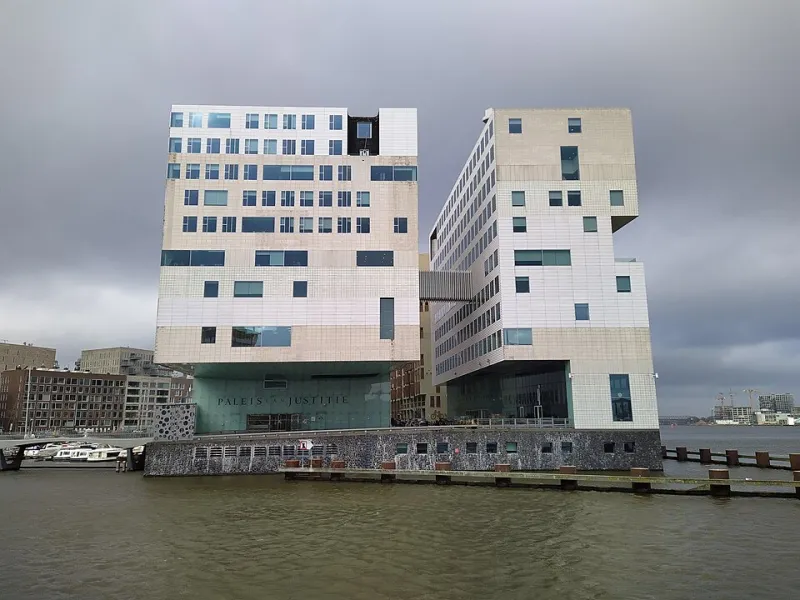
Photo: Gerd Fahrenhorst, CC BY 4.0, via Wikimedia Commons
What You Cannot See Is Running Your Office
When a company evaluates its office space, the conversation typically centers on square footage, lease terms, location, and perhaps the aesthetic appeal of the floor plan. What rarely enters the discussion is the mechanical and environmental infrastructure operating continuously in the background—the systems governing air quality, thermal comfort, acoustic conditions, and lighting levels that employees experience every hour of every workday.
This omission is consequential. A growing body of research, much of it conducted in applied workplace environments across the United States, establishes a clear and quantifiable relationship between these environmental variables and the cognitive output of the people working within them. Organizations that treat office infrastructure as a facilities maintenance concern rather than a performance strategy are, in effect, leaving productivity on the table.
Air Quality: The Invisible Performance Variable
Of all the environmental factors affecting office performance, indoor air quality is perhaps the most underestimated. The connection between air quality and cognitive function is no longer speculative—it is documented in peer-reviewed research with measurable effect sizes.
Studies published through Harvard's T.H. Chan School of Public Health found that employees working in environments with improved ventilation and lower concentrations of carbon dioxide and volatile organic compounds scored significantly higher on cognitive function tests across dimensions including crisis response, information usage, and strategy formulation. The performance gaps between well-ventilated and poorly ventilated environments were not marginal—they were substantial enough to have real implications for the quality of decisions being made inside those spaces.
For US organizations operating in older commercial buildings, many of which were constructed before modern ventilation standards were established, this represents both a risk and an opportunity. HVAC systems that are not regularly maintained, properly balanced, or upgraded to support increased occupancy density can silently degrade the cognitive environment without triggering any visible complaint or obvious symptom.
Smart ventilation systems—those capable of monitoring CO₂ levels in real time and adjusting airflow dynamically based on occupancy—have become increasingly accessible and cost-effective. The return on that investment, measured against the productivity value of the employees in the space, is difficult to argue against once the calculation is made explicit.
Thermal Comfort and the Productivity Drag Nobody Talks About
Office temperature is one of the most reliably contentious topics in any shared workplace. The conventional response to that contention is a thermostat set to a fixed compromise and a standing policy that satisfies no one completely.
What that approach misses is the documented performance impact of thermal discomfort. Research from organizations including Lawrence Berkeley National Laboratory has estimated that worker performance can decline measurably when temperatures fall outside an optimal range, with both excessive heat and excessive cold contributing to reduced concentration, increased error rates, and lower output quality.
Beyond the individual performance dimension, thermal discomfort also contributes to workplace friction—the low-grade interpersonal irritation that accumulates in shared spaces and gradually erodes collaboration quality and team cohesion.
The engineering solution is not a single perfect temperature but a zoned approach: designing the physical office with distinct thermal zones that align with the nature of the work being performed in each area. High-activity collaboration spaces can tolerate slightly cooler conditions. Focused individual work areas benefit from warmer, more stable environments. Implementing this kind of intentional thermal zoning requires upfront planning but produces a workplace where more employees are more comfortable more of the time—a condition that pays dividends in both performance and retention.
Acoustics: The Underengineered Dimension of Office Design
Noise is one of the most frequently cited sources of dissatisfaction in open-plan American offices, and one of the least systematically addressed. The standard response to acoustic complaints—adding a few soft furnishings, installing a white noise speaker, or designating a quiet room—rarely addresses the underlying engineering reality.
The acoustic performance of a workspace is determined by the interplay of surface materials, ceiling height, spatial layout, mechanical noise from HVAC systems, and the density and nature of the work being performed in the space. Managing that interplay requires intentional acoustic engineering, not decorative remediation.
The business case for acoustic investment is grounded in a well-documented phenomenon: speech intelligibility in a shared workspace—the degree to which a nearby conversation is comprehensible to people not participating in it—is one of the primary predictors of cognitive distraction and task-switching costs. When employees can inadvertently follow a colleague's conversation, their ability to sustain focused attention is compromised in ways that compound throughout the workday.
Organizations that invest in acoustic planning—through ceiling treatments, sound-masking systems, spatial separation of collaboration and focus zones, and material selection that manages sound reflection—create environments where deep work is genuinely possible. In an economy where knowledge work is the primary value driver, that is a competitive differentiator worth quantifying.
Lighting and the Circadian Dimension of Workplace Performance
The relationship between lighting quality and human performance extends well beyond simple visibility. Circadian lighting research—examining how light spectrum, intensity, and variation across the day affect alertness, mood, and sleep quality—has matured significantly over the past decade, with implications for workplace design that most facility managers have yet to fully incorporate.
Natural light access remains the gold standard. Employees with access to daylight report higher sleep quality, better mood, and greater overall wellbeing than those working in predominantly artificial light environments, according to research published in the Journal of Clinical Sleep Medicine. These are not soft, subjective benefits—they translate directly into the cognitive and emotional resources employees bring to their work.
For offices where natural light access is limited or unevenly distributed, tunable LED lighting systems—capable of adjusting color temperature and intensity to approximate the natural progression of daylight across the workday—offer a practical alternative. Morning settings that lean toward cooler, higher-intensity light support alertness and activation. Afternoon settings that shift toward warmer tones support sustained focus without inducing the fatigue that flat, high-intensity artificial light can generate.
Technology Integration as the Connective Layer
The environmental systems described above—air quality, thermal management, acoustics, lighting—do not operate in isolation. In a well-engineered modern office, they are connected through a building management platform that allows facility managers to monitor, adjust, and optimize conditions in real time based on occupancy patterns, time of day, and employee feedback.
This integration is where the concept of the smart workspace moves from aspiration to operational reality. Organizations that have invested in connected building infrastructure are not simply more comfortable—they are more responsive. When air quality in a densely occupied conference room degrades during a long meeting, the system adjusts. When a floor is underoccupied on a given day, energy consumption scales accordingly. When acoustic conditions in a collaboration zone are generating complaints, the data exists to diagnose and address the cause.
For executives evaluating office investments, this layer of technological integration is increasingly the differentiator between a building that is simply occupied and a building that actively supports the work being done inside it.
Engineering as Strategy
The organizations best positioned to attract and retain talent in the current US labor market are not necessarily those with the most impressive addresses or the most elaborate design aesthetics. They are those that have made the connection between the quality of the physical environment and the quality of the work it produces—and invested accordingly.
Workspace engineering is not a facilities expense. It is a performance strategy. And for organizations willing to approach it with the same analytical rigor they bring to technology investment or talent development, the returns are both measurable and sustainable.